
Looking for Elephants
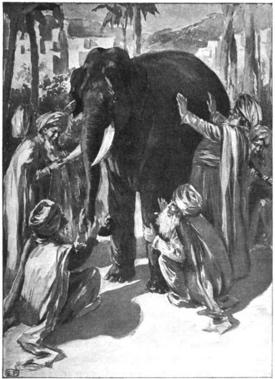
Recently, when working with an exploration team on some deep-water opportunities, I was reminded of the old parable of the Blind Men and the Elephant. As you probably know, the lesson of that story deals with the “limits of perception and the importance of complete context”. As the story goes, each person tried to describe the attributes and characteristics of an elephant by feeling only a single body part.
The first person, touching the trunk, said, “This being is like a thick snake”. To another one, feeling its ear, it seemed like a kind of “fan”. For a third, whose hand reached its leg, said the elephant is a “pillar, like a tree trunk”. The one feeling its side said the elephant “is a wall”. Another who felt its tail, described it as a “rope”. The last felt its tusk, stating the elephant is “hard, smooth and like a spear”.
The point is that one can only fully understand an elephant by observing and describing the whole thing. An appreciation for the functions of its individual body parts requires not only a good description of those parts, but also a more comprehensive understanding of the whole, the context of the Big Picture.
Passive margin, deep-water depositional systems can be enormous and complex. As the team and I worked through the individual geologic leads in specific areas, it became apparent we were missing some context. To their credit, the team had some excellent regional maps and cross sections readily at hand. It wasn’t until we had a description and basic understanding of the Big Picture could we begin to make meaningful predictions about individual leads in specific areas.
In developing Exploration prospects, the “devil is in the details”, but the Big Picture really matters.
