
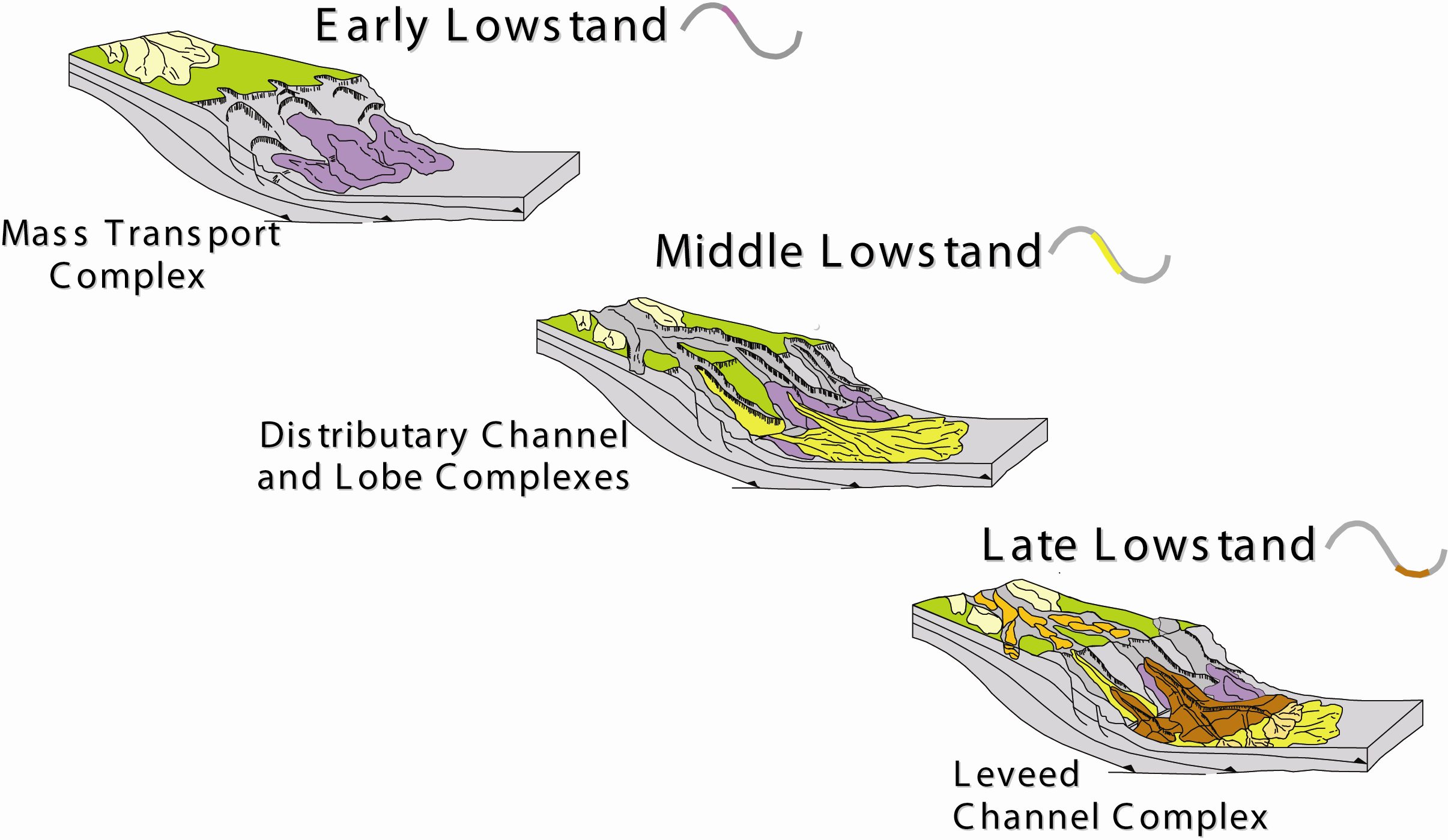
Sequence stratigraphy is a method developed by stratigraphers in the mid 1970s for identifying reservoir, source and seal lithologies in the subsurface. Originally, sequence stratigraphy was used primarily as a seismic interpretation tool. Based on reflection characteristics, this methodology allowed assemblages of strata to be interpreted within a hierarchy of chronostratigraphically significant seismic surfaces. The unconformity-bounded depositional sequence was recognized to be the fundamental stratigraphic unit and its formation was related to eustatic changes in sea-level. Unique associations of stratal geometries were interpreted as highstand, lowstand and transgressive systems tracts; the building blocks of depositional sequences. Today, sequence stratigraphic methodologies are routinely applied to a wide variety of data types and settings; well logs, cores, outcrops, etc. After years of systematic application and testing, the lowstand system tract (LST) submarine fan model is still widely referenced and used as the fundamental basis for the characterization and prediction of deep-water reservoirs. Yet, some of the most controversial aspects of sequence stratigraphy relate to the definition and recognition of the LST. Although commonly used, there is no consensus within the geoscience community regarding best applications and practices.
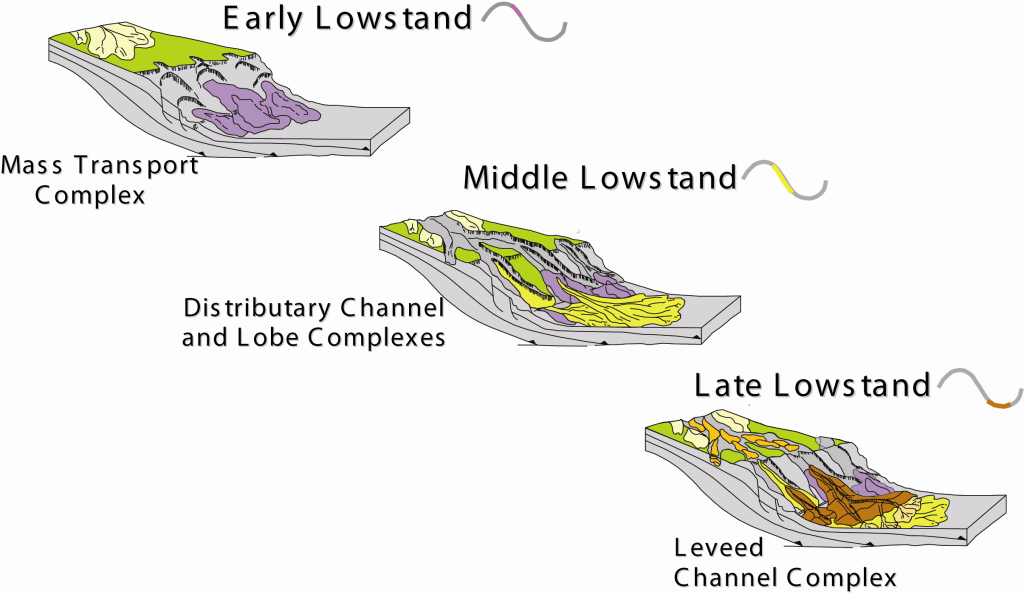
However, it is clear that an approach based on simple identification of a LST using one conceptual model is not enough to serve the needs of most subsurface projects. Many new advances and modifications to the LST Fan model have resulted as our stratigraphic resolution has increased through the careful integration of large, high-quality 3D seismic surveys with well logs, biostratigraphy, cores, outcrops and updated depositional process models. The products are enhanced facies and architectural models that describe a spectrum of deep-water lowstand deposits. The models document the temporal evolution and depositional history of reservoir bodies and relate these changes to the critical controls on deposition such as the sediment delivery system, transport mechanisms and gradient. The classic basin-floor fan represents one depositional style within a broad spectrum of styles. One key enhancement to the two-part LST model is that many “fans” are not fans at all, and are composite units that can be subdivided into numerous, higher frequency sequences that stack to form systematic vertical and plan-form patterns of net:gross, lithofacies, and architecture. These patterns record the depositional system’s evolutionary response to systematic changes in the controls on reservoir deposition. Recognizing and characterizing the LST fan in terms of its higher frequency components can lead to more accurate and predictive reservoir models in deep-water exploration and development settings around the world.
